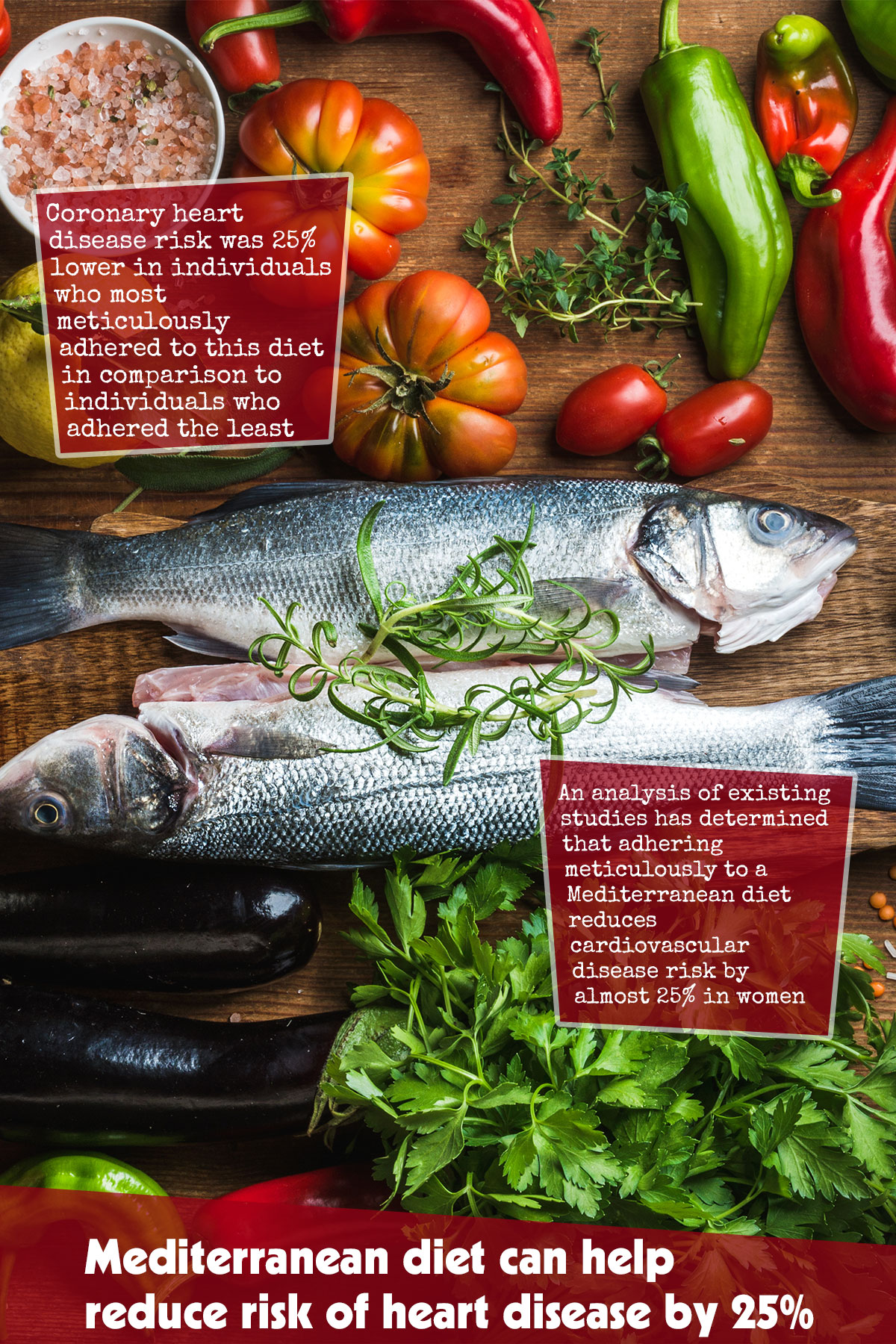
An analysis of existing studies has determined that adhering meticulously to a Mediterranean diet reduces cardiovascular disease risk as well as death by almost 25% in women.1✅ JOURNAL REFERENCE
DOI: 10.1136/heartjnl-2022-321930
Cardiovascular disease is responsible for over one-third of all deaths worldwide in women. Although a healthy diet is an important part of prevention, relatively few women have been included in the majority of relevant studies or the results haven’t been reported by sex.
And existing recommendations on the best ways to reduce the risk of cardiovascular disease don’t distinguish by sex.
The researchers searched databases for studies examining the potential effects of consuming a Mediterranean diet on the cardiovascular health of women and the risk of dying.
The Mediterranean diet is abundant in fruit, vegetables, whole grains, extra virgin olive oil, nuts, and legumes; moderate in shellfish/fish consumption; low to moderate in wine consumption; and low in processed foods, animal fat, dairy products, and processed/red meats.
From a preliminary selection of 190 relevant studies, 16 of them were included in the data analysis. They were generally conducted in Europe and the US, and involved over 700,000 women 18 years of age and older whose cardiovascular health was followed for 12.5 years on average.
The analysis results established that adhering meticulously to a Mediterranean diet was linked to a 24% reduced cardiovascular disease risk and a 23% reduced risk of any cause of death in women.
Coronary heart disease risk was 25% lower in individuals who most meticulously adhered to this diet in comparison to individuals who adhered the least, and although stroke risk was also lower, it wasn’t statistically significant.
The exclusion of each one of the studies individually from the analysis didn’t impact the results materially, which further supports a significant inverse connection between incident cardiovascular disease and total mortality with meticulous adherence to the Mediterranean diet in women.
Nonetheless, the researchers acknowledge several limitations to the results, which included that all the analyzed studies were observational and relied on self-reported questionnaires on food frequency. Potentially influential factor adjustments also varied over the included studies.
The gut microbiome antioxidant and impact of the Mediterranean diet on cardiovascular risk factors and inflammation are however some of the possible explanations for the associations observed.
The different components of the diet, which include omega-3 fatty acids, nitrates, polyphenols, reduced glycemic load, and increased fiber intake, could all separately play a role in an improved cardiovascular risk profile.
The mechanisms that explain the sex-specific impact of the Mediterranean diet on cardiovascular disease and dying however continue to be unclear.
Female-specific risk factors for cardiovascular disease, such as gestational diabetes, pre-eclampsia, premature menopause, and or risk factors predominantly female like systemic lupus, can all increase the risk of cardiovascular disease independently.
It’s possible that preventative measures like a Mediterranean diet targeting inflammation and risk factors for cardiovascular disease impose different types of effects in women in comparison to men.