A study has discovered that weight lifting for as little as 3 seconds every day can positively affect muscle strength. Researchers had 39 healthy individuals complete 1 muscle contraction at optimum effort for 3 seconds every day, 5 days a week for 4 weeks.1✅ JOURNAL REFERENCE
DOI: 10.1111/sms.14138
Either an isometric, or a concentric, or an eccentric bicep curl was completed at optimum effort, at the same time the maximum voluntary contraction strength of the muscles was measured before as well as after the 4 weeks.
Over the same period of 4 weeks, another group of 13 individuals who didn’t exercise were measured before as well as after. Muscle strength increased over 10% after the 4 weeks for the group who completed the eccentric bicep curl, but less muscle strength increase was seen in the other 2 exercise groups.
The study results proved that individuals don’t have to spend huge amounts of time exercising for improving muscle strength and that muscle strength can be increased with a tiny amount of exercise stimulus. The majority of individuals think lots of time has to be spent exercising to increase muscle strength, but the study clearly shows that this is not the case.
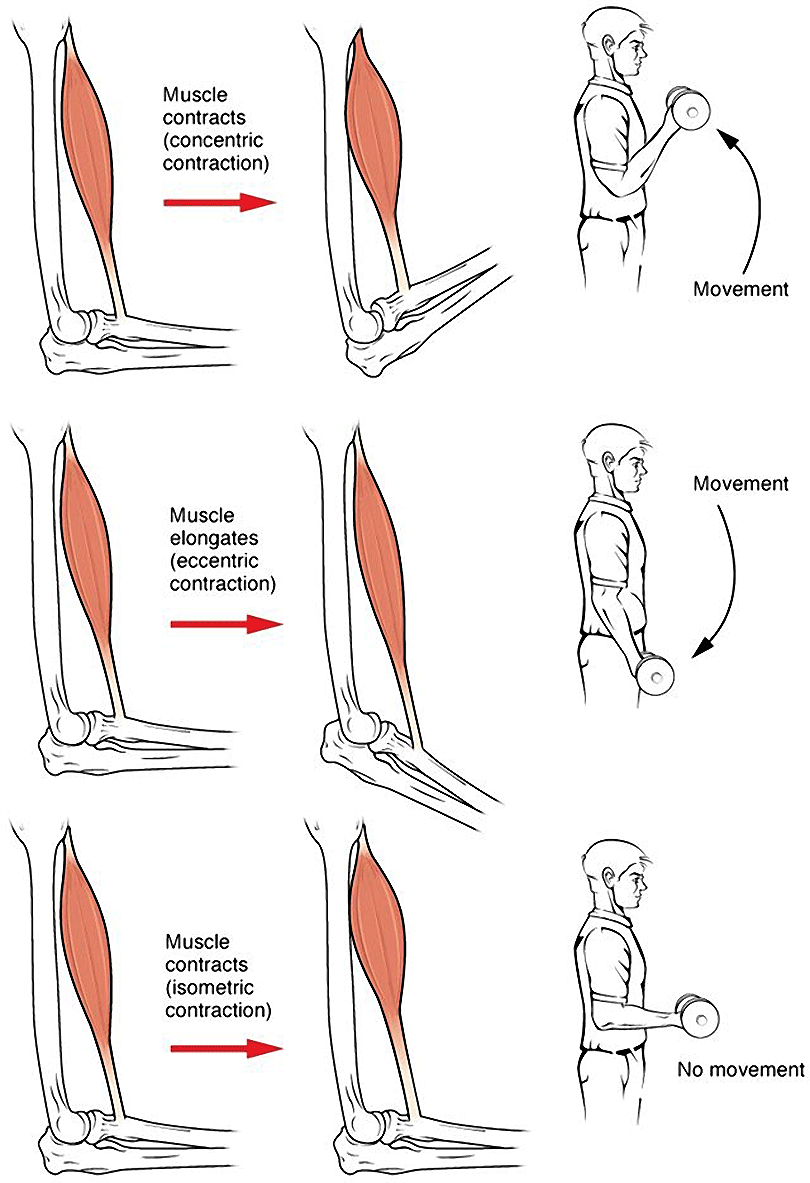
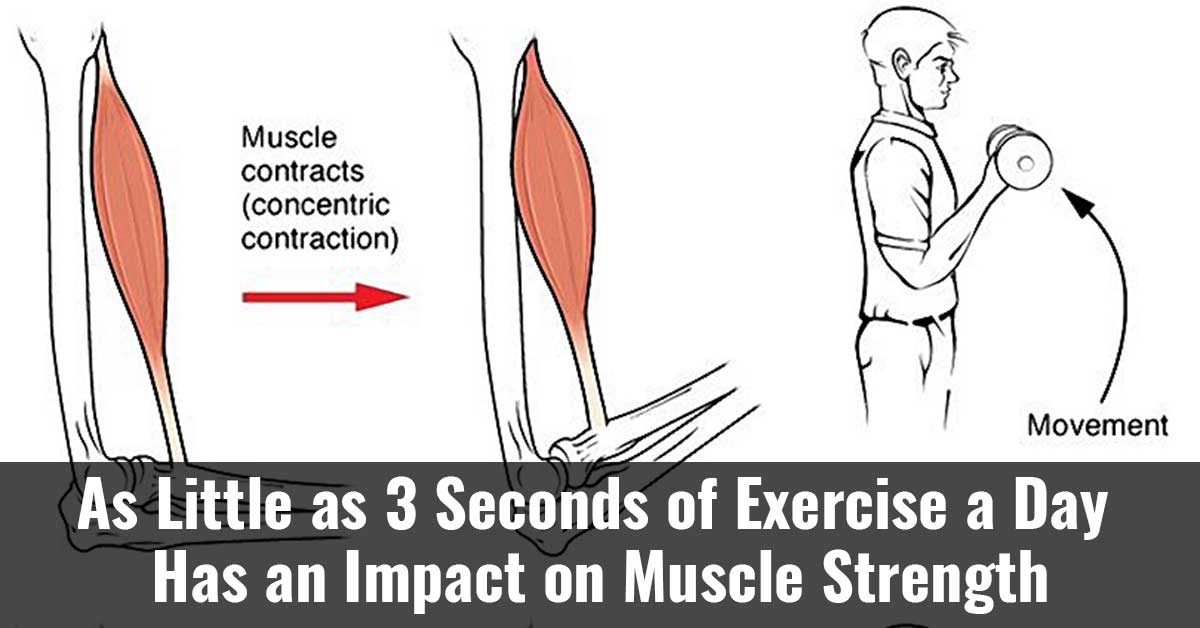
Isometric versus concentric versus eccentric are the 3 classifications that correspond to what the muscle is doing when in action. When the muscle is stationary while under load it’s an isometric contraction, when the muscle shortens it’s a concentric contraction, and when the muscle lengthens it’s an eccentric contraction.
A bicep curl entails holding a dumbbell with one arm at the side of the body before lifting it up towards the chest before bringing it back down to the side of the body. The bicep is in concentric contraction when lifting the dumbbell, in eccentric contraction lowering the dumbbell back down, and in isometric contraction when holding the dumbbell parallel to the ground.
The study reveals that all 3 lifting methods produced some muscle strength benefit, but eccentric contraction provided the best results by far. The concentric, isometric and eccentric strength was measured for each group. Those in the group lifting the dumbbell with a concentric contraction had a slight improvement of 6.3% in isometric strength with no improvement anywhere else, and the individuals in the isometric group had only a 7.2% eccentric strength increase.
The individuals in the eccentric group however had substantial strength improvements in all 3 measurements: concentric strength increased by 12.8%, isometric strength increased by 10.2%, and eccentric strength increased by 12.2%. The overall muscle strength of the eccentric group improved by 11.5% after only 60 seconds of total effort.